
Why Smart MSPs Are Prioritizing IT Asset Management in 2025
Discover how MSP asset management software helps streamline operations, reduce costs, and improve client satisfaction. Learn why it’s essential for modern MSPs.
Keeping track of every device, license, and configuration across multiple clients quickly becomes chaotic for MSPs.
As IT environments grow in complexity, manual asset management isn’t just inefficient but also invites costly errors. For example, a study from 44North reports that unmanaged software licenses lead organizations to overspend by around 25% on software they’re not even using.
For MSPs supporting diverse infrastructures, that kind of waste multiplies fast. A missed patch or outdated asset inventory can cause serious security vulnerabilities and compliance problems, not to mention erode client trust. That’s why embracing IT asset management software built for MSP workflows isn’t only smart but essential.
In this blog, we’ll explore what IT asset management is, why it matters, and how the right tool turns it from a tedious chore into a strategic advantage. Whether you’re managing a growing book of clients or hundreds of endpoints, knowing what to look for in asset management software can make all the difference.
What Is IT Asset Management?
IT asset management (ITAM) is the process of tracking and managing all the technology assets across an organization or client environment, everything from laptops and servers to software licenses, warranties, and cloud subscriptions. For MSPs, ITAM involves maintaining visibility over these assets across multiple clients, environments, and endpoints.
But it’s not just about logging what hardware and software exist. True asset management also captures critical lifecycle data: purchase dates, current status, assigned users, and service history. This information helps MSPs make informed decisions about upgrades, retirements, budget forecasting, and support.
At its core, ITAM provides a single source of truth for everything deployed in the field. That visibility is what helps MSPs stay ahead of vulnerabilities, license audits, and unexpected downtime. In a world where environments shift daily, especially with hybrid and remote setups, having a reliable asset inventory isn’t a luxury, but table stakes for delivering proactive support.
Why Is Using IT Asset Management Software Important?
Manual tracking might cut it for small teams, but it doesn’t scale for MSPs juggling multiple client environments. Spreadsheets can’t keep up with the pace of asset changes, and one missed update can lead to security gaps or licensing issues.
IT asset management software solves this by centralizing data, automating alerts, and giving MSPs real-time visibility into hardware, software, and licensing. Instead of reacting to problems, teams can get ahead of them, like catching expiring warranties or outdated firmware before they become risks.
It’s also critical for compliance. Accurate asset records help MSPs meet industry regulations and simplify audits. At the end of the day, asset management software is what enables MSPs to scale, stay secure, and deliver consistent service across every client.
Benefits of MSP Asset Management Software
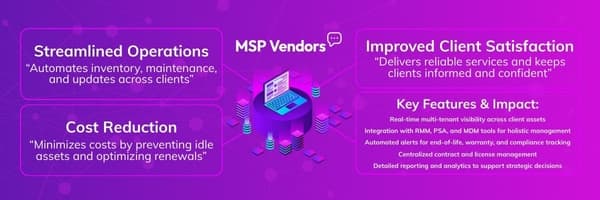
For MSPs, asset management software isn’t only a back-office tool but also directly influences how you deliver value, maintain trust, and grow efficiently. Beyond visibility, the right platform helps reduce friction in your daily operations and improves both technician productivity and client outcomes. Here’s a deeper look at the benefits:
Increased Efficiency
Time is a limited resource, especially for MSPs supporting multiple clients. Without automation, technicians can get bogged down manually tracking devices, logging serial numbers, or updating spreadsheets, tasks that add little value but eat up hours each week. Asset management software automates much of that routine work, from discovering new devices to flagging status changes. This creates a more streamlined workflow where your team spends less time on admin and more time on actual problem-solving and strategic planning. Over time, that operational lift translates into faster response times and more profitable service delivery.
Improved Accuracy
Manual processes are naturally prone to human error. One mistyped serial number or overlooked license expiry can cause downstream issues like failed audits or downtime. Asset management software brings structure to chaos, ensuring all assets are tracked consistently and updated in real time. Many platforms also offer built-in validation and synchronization features that reduce inconsistencies between what is deployed and what is documented. For MSPs managing environments with hundreds or thousands of endpoints, this level of precision is critical, not just for operational stability, but for maintaining client confidence.
Enhanced Cost Management
When you know exactly what assets are in use and how they’re performing, you can make smarter financial decisions. MSPs often encounter situations where clients are paying for software licenses or cloud instances that aren’t being used. With proper asset tracking, it becomes easier to pinpoint underutilized resources and reallocate them or cut unnecessary expenses. Over time, this results in more accurate billing, better forecasting, and a stronger advisory role with clients. You’re no longer just reacting to costs but helping control and reduce them.
Improved Client Satisfaction
Clients expect their MSPs to be responsive and proactive, and asset management software plays a key role in making that happen. When you have full visibility into their infrastructure, you can flag potential issues before they escalate, like aging hardware that’s due for replacement or firmware that needs updating. It also means you can answer client questions faster, whether they’re asking about device history or software license usage. This kind of responsiveness not only improves day-to-day service but also strengthens your reputation during quarterly business reviews or contract renewals.
Streamlined Reporting and Analytics
Reporting can be a time-consuming task if you’re pulling data from multiple tools or manually compiling spreadsheets. Good asset management software gives you instant access to reporting dashboards and exportable data sets. Whether you need to generate audit logs, show asset depreciation, or present KPIs to clients, having that information at your fingertips makes a big difference. Some platforms also integrate with business intelligence tools, giving you the ability to customize dashboards and visualize trends across client environments. This not only improves internal decision-making but also adds value to your client reporting by delivering insights, not just data.
Key Features of MSP Asset Management Software
Not all asset management platforms are built with MSPs in mind. The best tools go beyond simple inventory tracking and include features designed to support multi-tenant environments, automation, and integration with the rest of your stack. Below are the core features that matter most when evaluating MSP asset management software.
Automation
Manual asset tracking isn’t scalable. Automation is at the heart of every efficient MSP operation, and your asset management tool should support it from the start. Look for features like automated discovery of devices across networks, scheduled scans, and rules-based workflows that notify your team about expiring licenses, warranties, or hardware replacements. The less you have to chase data manually, the more time you free up for strategic work and client support.
Reporting and Analytics
Clear, accurate reporting is essential for internal decisions and client-facing conversations. Asset management software should provide customizable dashboards and detailed reports covering device health, lifecycle status, licensing, and compliance. This isn’t just about data but about surfacing actionable insights you can share with clients during QBRs or use to identify service opportunities, such as outdated infrastructure or unsupported software versions.
Patch Management
Keeping devices updated is crucial for security and performance, but it’s easy to lose track without centralized oversight. Many asset management platforms now include or integrate with patch management tools, giving you a unified view of what’s been updated, what’s pending, and where risks exist. This helps MSPs close security gaps faster and stay compliant with client SLAs and regulatory frameworks.
Integrations
Your asset management platform shouldn’t exist in a silo. It needs to integrate seamlessly with your PSA, RMM, helpdesk, billing, and documentation tools. Native integrations reduce the need for redundant data entry and improve information flow across systems. For example, syncing asset data with your ticketing system can speed up issue resolution, while syncing with billing platforms ensures accurate client invoicing tied to real asset usage.
Security Management
As attack surfaces grow, asset visibility becomes a security issue. The right software should help identify unauthorized devices, track firmware versions, and alert you to devices that don’t meet compliance standards. Some tools also include role-based access control and audit logging, giving you stronger governance over sensitive environments. This added layer of oversight helps MSPs align with cybersecurity best practices and deliver greater peace of mind to clients.
Ready to Take Control of Your Clients’ IT Assets?
Without the right tools, asset management can feel like a moving target. Devices change hands, licenses expire, and environments evolve, often faster than your team can manually track. But it doesn’t have to be that way.
Modern MSPs are expected to deliver more than just reactive support. They’re strategic partners, advisors, and security gatekeepers. And to meet that expectation, you need complete visibility and control over every asset in every environment you manage. The right asset management software gives you that edge.
If you’re ready to eliminate guesswork, boost operational efficiency, and build deeper client trust, it’s time to invest in a platform that fits your MSP’s needs.
Explore the latest solutions built for scale, automation, and compliance, because proactive asset management isn’t just a nice-to-have anymore. It’s a core part of delivering better service, smarter recommendations, and long-term value.