
Why Mobile Device Management Is Now Essential for MSPs to Stay Secure and Scalable
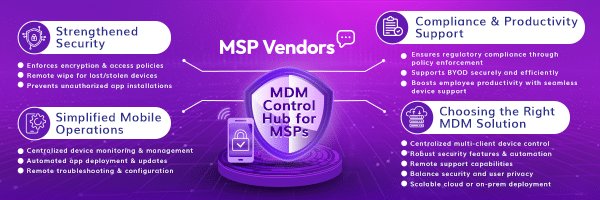
Mobile Device Management (MDM) has become non-negotiable for MSPs managing a remote or hybrid workforce. Here’s how MDM strengthens security, simplifies mobile operations, and what to look for when choosing the right solution.
Employees today operate in a fragmented digital landscape, juggling smartphones, tablets, and laptops for a single workday. In fact, a 2023 survey found that the average worker uses 2.5 devices for their job. While convenient, this scenario dramatically expands the number of endpoints MSPs must manage and secure.
Mobile access is practically a business staple now. One study reports that 93% of U.S. employees with smartphones use them for work at least a third of the time. But with this increased access comes risk: 41% of all data breaches were the result of lost or stolen devices, and in healthcare, that figure rises to 68%.
Imagine a client’s field technician misplacing a tablet loaded with sensitive customer data, or an executive’s phone being stolen while traveling. Without the right controls and visibility, those are just headline risks waiting to happen, breaches that MSPs are expected to prevent.
Mobile Device Management (MDM) solves exactly this. It gives MSPs the tools to centrally enforce policy, lock or wipe lost devices, control app and network access, and keep logs for compliance. In the sections that follow, we’ll walk through what MDM really means in a managed services environment and how choosing the right system can protect your clients and strengthen your MSP business.
What is Mobile Device Management (MDM)?
Mobile Device Management (MDM) is a centralized platform that allows MSPs to monitor, configure, and secure mobile devices, like smartphones, tablets, and laptops, used by their clients. It works by remotely enrolling devices, applying security policies, and enabling actions like locking, wiping, or tracking lost equipment.
Beyond basic control, MDM helps enforce compliance, prevent unauthorized access, and maintain consistent device performance across a distributed workforce. For MSPs managing multiple clients, MDM offers scalable visibility and control without the overhead of hands-on support.
Why Is MDM Important?
As mobile device use increases across industries, so does the potential for threats. MSPs are expected to manage not just the convenience of mobility, but the consequences that come with it. Here’s where MDM becomes essential:
Sensitive Data Exposure
Employees often access business systems via personal or unsecured devices, leaving sensitive client data vulnerable. According to Verizon’s 2024 Mobile Security Index, 74% of organizations experienced mobile-related security incidents, many involving unauthorized access to data. Without MDM enforcing encryption and access policies, data exposure risks multiply, especially when clients operate in regulated industries.
Device Theft
Lost or stolen devices are still one of the top causes of data breaches. In many cases, these devices contain confidential business information or client records. MDM gives MSPs the ability to remotely lock or wipe these devices, reducing the window of opportunity for misuse and maintaining client trust.
Malware Control
Mobile threats are evolving fast. Phishing attacks via SMS, malicious apps, and unsecured Wi-Fi connections have made mobile endpoints a prime target. Without MDM, there’s no way to monitor device health or block risky behavior at scale. Centralized visibility and automated security policy enforcement are critical to stopping threats before they spread.
Compliance
From HIPAA to GDPR, compliance frameworks increasingly include mobile access in their scope. MDM helps MSPs ensure that only authorized users can access client systems, data is encrypted, and activity is logged for audits. It’s not just about avoiding fines, but also proving that the mobile side of your client’s infrastructure is being taken seriously.
Benefits of using MDM in an MSP context
For modern MSPs, MDM is more than a checkbox for endpoint protection; it’s a strategic layer that enhances service delivery, operational control, and client experience. As clients adopt hybrid and mobile-first models, MSPs that offer efficient mobile device management can differentiate themselves and create longer-term value. Here’s how MDM drives benefits across the board:
Increased Efficiency in Managing Mobile Devices
Managing dozens or hundreds of client-owned devices manually isn’t scalable. Without MDM, even simple tasks like pushing a software update or configuring email settings can eat up valuable technician time. MDM solves this by centralizing device provisioning, policy enforcement, and app deployment. Technicians can onboard new users in minutes, enforce role-based profiles, and resolve issues remotely, cutting support overhead and speeding up turnaround.
For MSPs juggling multiple environments, this automation is a game-changer. Instead of logging into individual devices or relying on end-users to follow instructions, MDM lets you standardize and streamline mobile operations across all clients from a single dashboard.
Increased Security in Mobile Device Management
Security threats don’t stop at the office door, and neither should your controls. MDM gives MSPs a comprehensive view of each client’s mobile fleet, enabling real-time monitoring of compliance, app usage, and device health. If a device is compromised, jailbroken, or operating on an outdated OS, MDM tools can flag it instantly or take action automatically.
More importantly, MDM enforces consistent policies across all endpoints: password complexity, encryption, VPN access, app blacklisting, and even remote wipe capabilities. These features close security gaps that would otherwise go unnoticed, especially in bring-your-own-device (BYOD) environments or fast-growing teams.
When MSPs use MDM to anticipate and neutralize mobile threats, they aren’t just protecting devices, but strengthening their role as trusted security partners.
Increased Productivity and Collaboration
Security and usability don’t have to conflict. With MDM, MSPs can configure devices so users get fast, secure access to the tools they need, without jumping through hoops or relying on unsecured workarounds. Mobile teams can access shared documents, video calls, and project tools on the go, while MSPs maintain visibility and control.
You can also pre-install essential apps, restrict distractions, and manage device usage during business hours, enabling more focused work, better uptime, and fewer support calls. When remote teams are properly supported, productivity improves across the board, and your clients notice.
Cost Reduction in Mobile Management
Inefficient mobile support costs time and money. Without automation, device setup, troubleshooting, and security checks often require multiple technician touchpoints, or worse, reactive support after an incident has already occurred. MDM reduces those pain points by handling most tasks remotely, proactively, and at scale.
There are also hidden savings. MDM helps locate lost devices, prevent data loss, and extend the life of hardware by ensuring updates are regularly applied. On the compliance side, avoiding fines or audit failures saves your clients thousands and improves your own reputation as a service provider.
In short, MDM isn’t just a line item. It’s a cost-control lever that benefits both your internal ops and your clients’ bottom lines.
Improved Customer Satisfaction
The more devices your clients rely on, the more they expect seamless support. With MDM, MSPs can deliver fast resolutions, proactive alerts, and standardized mobile experiences that reduce disruption. Clients notice when their teams stay productive, their data stays protected, and their devices “just work.”
Offering MDM also sends a clear message: you’re not just reactive, you’re strategic. You’re looking ahead at how technology intersects with user behavior, compliance, and business growth. That builds trust and positions your MSP for longer-term contracts, upsells, and referrals.
Selecting MSP MDM Software
Not all MDM platforms are created equal, and for MSPs, the right choice isn’t just about features. It’s about scalability, security, and how well the solution fits into your existing tool stack. A poorly chosen MDM tool can increase workload instead of reducing it, or worse, leave critical client endpoints exposed. As you evaluate vendors, here are the core criteria that matter most in an MSP context:
Hosting Model
Cloud-based MDM is often preferred by MSPs for its flexibility, easy deployment, and scalability. It allows your team to manage client devices across geographies without needing on-prem infrastructure. However, some clients, especially in finance or healthcare, may require on-premise or hybrid options due to compliance concerns. The ideal MDM platform should offer deployment models that match your clients’ technical and regulatory needs.
Remote Access
One of the most essential features of any MDM solution is the ability to troubleshoot and manage devices remotely. Whether it’s pushing security patches, configuring Wi-Fi settings, or locking a stolen phone, your technicians need fast, secure access from anywhere. Make sure the platform supports remote control and real-time diagnostics for both iOS and Android, ideally without user intervention.
Security Policies
Granular policy enforcement is where MDM earns its value. You should be able to define security standards per client, user group, or device type, enforcing password complexity, encryption, VPN access, camera restrictions, and more. Look for platforms that also support containerization or dual persona options, especially for BYOD environments where work and personal data must remain separate.
Geofencing
For clients with mobile workforces or region-specific compliance requirements, geofencing adds an extra layer of control. It allows you to trigger specific actions, like disabling access to certain apps or enforcing VPN usage, based on a device’s location. This can be especially useful for sensitive industries or clients with distributed field operations.
Logging and Reporting
Robust reporting isn’t just helpful; it’s often required. Whether it’s proving compliance, investigating incidents, or reviewing performance metrics, detailed logs give MSPs the visibility needed to manage risk. Look for solutions that offer customizable reports, alerting, and integration with your PSA, RMM, or SIEM tools. Bonus points if reports are client-friendly and can be white-labeled.
Scalability
An MDM solution should scale with both your MSP and your clients. Whether you’re onboarding 10 devices or 10,000, performance shouldn’t degrade, and license management should stay simple. Evaluate whether the vendor supports multi-tenant architecture, role-based access controls, and automated provisioning, especially if you plan to offer MDM as part of a bundled package.
MDM Is More Than a Feature, It’s a Competitive Edge
Clients expect secure, seamless mobile experiences, and MSPs that deliver that peace of mind stand out. MDM isn’t just another tool. It’s how you scale control, reduce risk, and keep mobile endpoints from becoming liabilities.
As mobile threats rise and compliance demands grow, MDM helps you stay proactive, not reactive. It tightens security, boosts client trust, and adds real value to your service offering.
Now is the time to make mobile device management a core part of your strategy, not just for today’s risks, but for tomorrow’s growth.