
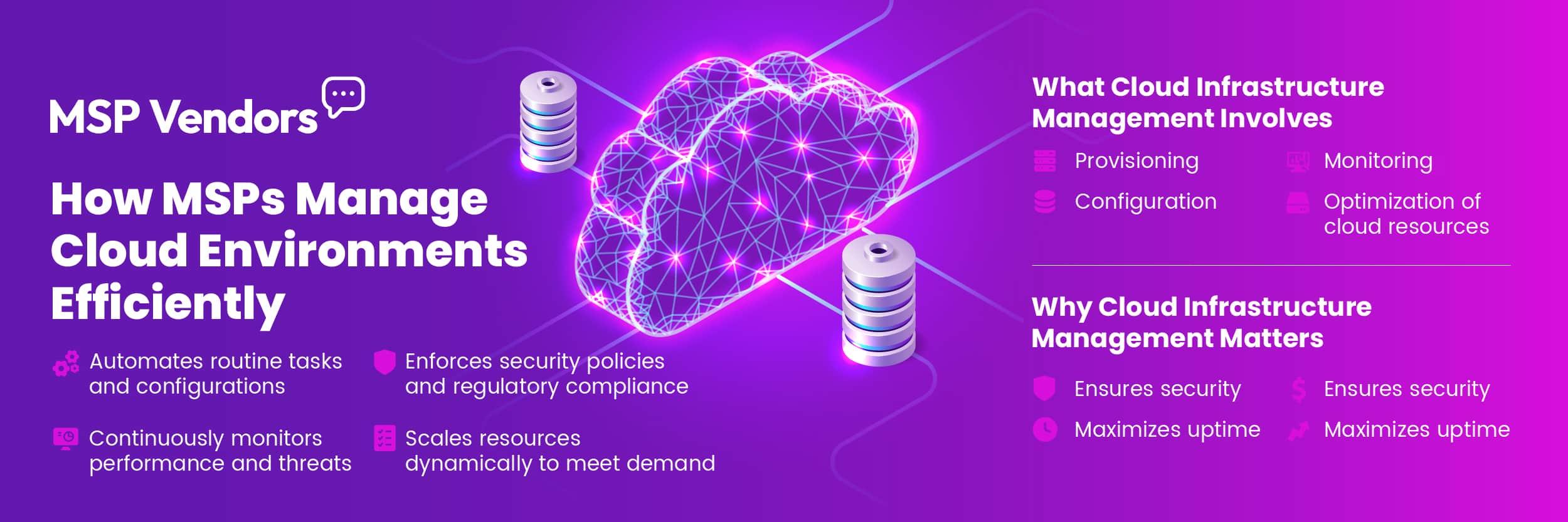
Cloud Infrastructure Management: Key Strategies and Best Practices for MSPs
Explore what cloud infrastructure management involves, why it matters, and how MSPs can manage cloud environments efficiently, securely, and at scale.
Cloud adoption has reached new heights, but managing cloud infrastructure effectively is a different story. While most businesses have already moved parts of their operations to the cloud, not all of them are equipped to handle the growing complexity that comes with it. In fact, 82% of enterprises today operate in a hybrid cloud environment, and many struggle with performance visibility, resource optimization, and cost control across their cloud assets.
For Managed Service Providers (MSPs) and IT professionals, this complexity isn’t just a technical issue; it’s a business risk. The infrastructure supporting cloud environments must be managed proactively, not reactively. That means going beyond spinning up virtual machines or using default configurations. It requires strategy, tooling, and ongoing insight into performance, security, and cost.
This blog breaks down what cloud infrastructure management really means, why it matters, and how MSPs can deliver value by making cloud environments more efficient, secure, and resilient. Whether you’re running client workloads on AWS, Microsoft Azure, or a private cloud setup, understanding the foundations of cloud infrastructure management will shape how you scale and deliver reliable service. Let’s start with the basics.
What is Cloud Infrastructure Management (CIM)?
Cloud Infrastructure Management (CIM) is the process of overseeing and optimizing the core components that power cloud environments: compute, storage, networking, and virtualization. It ensures that cloud systems run efficiently, securely, and in line with business needs.
For MSPs, CIM goes beyond basic maintenance. It involves configuring resources, monitoring performance, securing data, and scaling systems as demands shift. With cloud environments being highly dynamic, CIM helps maintain control, visibility, and compliance across platforms.
In short, CIM is how MSPs maintain cloud infrastructure’s smooth operation while managing costs, risk, and performance.
What Are the Key Components of Cloud Infrastructure?
Managing cloud infrastructure effectively starts with understanding its core building blocks. Each layer – hardware, software, and networking – plays a distinct role in delivering scalable and reliable cloud services.
Hardware
Even in the clouds, physical infrastructure still matters. Behind every virtual machine or storage bucket is a data center filled with physical servers, storage arrays, and power systems. Cloud providers handle this layer, but MSPs still need to consider hardware capabilities when selecting vendors or planning workloads. Performance, location, and redundancy all depend on what’s happening under the hood.
Software
The software layer includes virtualization platforms, operating systems, and orchestration tools that enable flexibility and automation. This is where MSPs often have the most control, configuring virtual machines, containers, and applications to run in optimized environments. Effective software management ensures that resources are used efficiently and services are responsive to demand.
Network
The network is the connective tissue of cloud infrastructure. It includes everything from load balancers and firewalls to VPNs and APIs. A strong network setup ensures secure, low-latency connections between cloud resources and end users. Misconfigurations here can lead to performance bottlenecks or security vulnerabilities, so network visibility and policy management are crucial.
Together, these components form the foundation of any cloud environment. Understanding how they interact helps MSPs design, monitor, and manage infrastructure that delivers consistent value to their clients.
Challenges of Cloud Infrastructure Management
While the cloud offers flexibility and scalability, managing its infrastructure isn’t always straightforward. MSPs often face a mix of technical and operational hurdles that can impact performance, cost, and client satisfaction. Here are some of the most common challenges:
Expertise Requirements
Cloud platforms evolve quickly. Each provider, whether it is AWS, Azure, or Google Cloud, has its own architecture, tools, and best practices. Staying current takes time, training, and often certification. Without the right expertise, MSPs risk misconfiguring environments, missing optimization opportunities, or creating security gaps.
Complexity and Integration
Modern cloud environments rarely exist in silos. They’re a mix of public, private, and hybrid setups, often tied to legacy systems or third-party platforms. Managing this complexity means dealing with multiple interfaces, APIs, and compliance frameworks. Integration issues can lead to inefficiencies or even system failures if not handled carefully.
Cost Management
Cloud costs can spiral quickly if left unchecked. Overprovisioned resources, unused instances, or hidden data transfer fees can eat into margins. MSPs must actively monitor usage, identify waste, and adjust configurations to keep spending aligned with value. Clients expect predictability in pricing, so cost transparency is just as important as performance.
Successfully navigating these challenges requires a combination of technical skills, proactive planning, and the right set of tools. For MSPs, it is not just about solving problems but preventing them before they impact the client.
Principles of Effective Cloud Infrastructure Management
To manage cloud infrastructure well, MSPs need more than just tools. They need guiding principles that ensure consistency, efficiency, and resilience. These principles serve as the foundation for decision-making, regardless of the cloud provider or environment.
Resource Allocation
Cloud resources should be provisioned based on actual needs, not guesswork. Over-allocation leads to wasted spending, while under-allocation can cause performance issues. A solid resource allocation strategy involves right-sizing workloads, automating scaling policies, and regularly reviewing usage patterns to match supply and demand.
Cloud Automation
Automation reduces the burden of repetitive tasks and lowers the risk of human error. Whether it’s auto-scaling instances, applying patches, or backing up data, automating routine operations helps MSPs maintain consistent performance and respond faster to issues. It also frees up time for higher-value tasks like strategic planning or incident analysis.
Monitoring and Regular Audits of Cloud Infrastructure
Visibility is everything. MSPs must monitor the health, usage, and performance of cloud resources in real time. This includes tracking uptime, latency, and error rates, as well as setting alerts for anomalies. Regular audits help uncover misconfigurations, security gaps, or inefficient setups, giving MSPs the insight they need to make improvements.
Security and Compliance
Security cannot be an afterthought. Infrastructure must be built and maintained with protection in mind. This includes encryption, access control, logging, and vulnerability management. MSPs should also align infrastructure with relevant compliance standards, whether that’s HIPAA, SOC 2, GDPR, or others, depending on client needs.
These principles are not optional. They shape how cloud environments operate day to day and directly impact the level of trust and performance clients can expect from their MSP.
Best Practices for Cloud Infrastructure Management
Principles guide the “why,” but best practices guide the “how”. When applied consistently, these practices help MSPs maintain cloud environments that are stable, cost-effective, and adaptable, qualities that directly influence service quality and client trust.
Automation
Wherever possible, automate. Use infrastructure as code (IaC) to manage deployments, automate patching to reduce vulnerabilities, and configure auto-scaling to respond to workload spikes. Automation ensures repeatability, reduces manual errors, and allows MSP teams to focus on proactive optimization rather than putting out fires.
Artificial Intelligence (AI)
AI is becoming a key player in cloud infrastructure management. From anomaly detection to predictive analytics, AI helps identify patterns that humans might miss. For example, AI-driven tools can forecast usage trends, detect early signs of infrastructure strain, or recommend more efficient resource configurations. It’s not about replacing engineers but augmenting their capabilities with faster, data-driven insights.
Documentation
Well-maintained documentation may not be glamorous, but it’s essential. Clear records of configurations, policies, and procedures make onboarding easier, reduce troubleshooting time, and improve continuity when team members change. MSPs that treat documentation as part of their workflow, not an afterthought, can respond more effectively to incidents and scale operations with less friction.
While tools and platforms will continue to evolve, these practices create a solid operational baseline. They help MSPs deliver consistent value across cloud environments, avoid costly missteps, and keep pace with the growing expectations of modern cloud clients.
Smarter Cloud Infrastructure Management Starts Here
The real challenge is not moving the cloud but rather managing it well. For MSPs, cloud infrastructure management is where service delivery either scales or breaks down. Without the right strategy, even the best tools fall short.
From automation and AI to security and cost control, how you manage infrastructure shapes client outcomes and your bottom line. It’s not only about keeping things running but also making them run smarter.
If you’re ready to level up your cloud practice, now is the time to rethink your approach.
MSPVendors.com connects you with insights and solutions built for scale, performance, and trust.